



Coffee
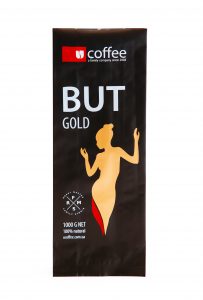 Coffee blend But Gold Family Studio / 70% of Arabica and 30% of Robusta
Pleasant sourness of the fragrant Arabica and the light fortress of the robusta. Aftertaste is a soft taste of cocoa and spices.
Coffee blend But Gold Family Studio / 70% of Arabica and 30% of Robusta
Pleasant sourness of the fragrant Arabica and the light fortress of the robusta. Aftertaste is a soft taste of cocoa and spices.
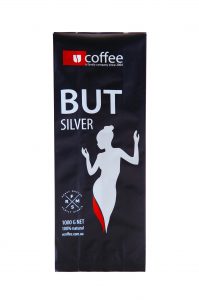 Coffee blend But Silver Family Studio / 50% of Arabica And 50% of Robusta
Ideally balanced taste. Pleasant durability and slightly source taste. Aftertaste - dark chocolate.
Coffee blend But Silver Family Studio / 50% of Arabica And 50% of Robusta
Ideally balanced taste. Pleasant durability and slightly source taste. Aftertaste - dark chocolate.
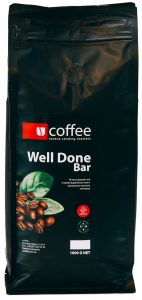 Coffee blend Well Done Bar / 70% of Arabica and 30% of Robusta
М’який аромат i яскраво виражений смак з приємними кислими нотками.
Coffee blend Well Done Bar / 70% of Arabica and 30% of Robusta
М’який аромат i яскраво виражений смак з приємними кислими нотками.
 Coffee Cuba / Arabica 100%
Low acidity. Aftertaste: chocolate, tobacco, red apple, spices.
Coffee Cuba / Arabica 100%
Low acidity. Aftertaste: chocolate, tobacco, red apple, spices.
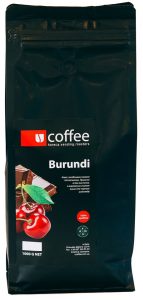 Coffee Burundi / Arabica 100%
In the fragrance there are floral shades, in the flavor cherry and plum notes with a chocolate notes.
Coffee Burundi / Arabica 100%
In the fragrance there are floral shades, in the flavor cherry and plum notes with a chocolate notes.
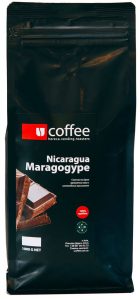 Coffee Nicaragua Maragogype / Arabica 100%
King beans!
Delicious, very aromatic coffee with chocolate flavor.
Coffee Nicaragua Maragogype / Arabica 100%
King beans!
Delicious, very aromatic coffee with chocolate flavor.
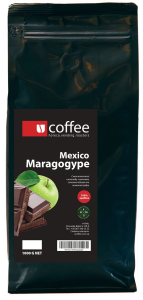 Coffee Mexico Maragogype / Arabica 100%
King beans!
Taste of milk chocolate with hints and lemon zest.
Coffee Mexico Maragogype / Arabica 100%
King beans!
Taste of milk chocolate with hints and lemon zest.
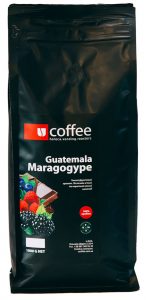 Coffee Guatemala Maragogype / Arabica 100%
King beans!
Long and persistent aftertaste of dark chocolate with berry notes.
Coffee Guatemala Maragogype / Arabica 100%
King beans!
Long and persistent aftertaste of dark chocolate with berry notes.
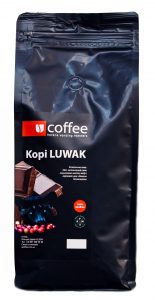 Coffee Kopi Luwak / Arabica 100%
Elite exclusive coffee.
Coffee Kopi Luwak / Arabica 100%
Elite exclusive coffee.
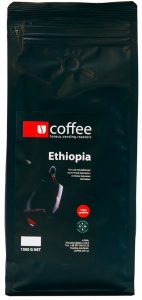 Coffee Ethiopia Yirgacheffe / Arabica 100%
Gentle and at the same time a savory flavor with a slight wine taste.
Coffee Ethiopia Yirgacheffe / Arabica 100%
Gentle and at the same time a savory flavor with a slight wine taste.
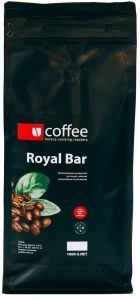 Coffee blend Royal Bar / 80% of Arabica and 20% of Robusta
Soft aroma and pronounced taste with pleasant sour notes.
Coffee blend Royal Bar / 80% of Arabica and 20% of Robusta
Soft aroma and pronounced taste with pleasant sour notes.
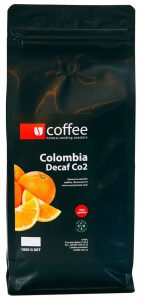 Coffee Colombia Decaf CO2 / Arabica 100%
Organic coffee without caffeine. Pleasant and soft citrus taste.
Coffee Colombia Decaf CO2 / Arabica 100%
Organic coffee without caffeine. Pleasant and soft citrus taste.
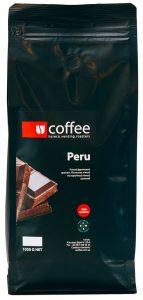
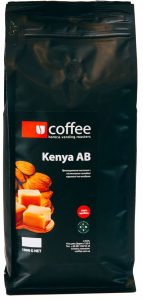 Coffee Kenya AB / Arabica 100%
Aftertaste - sweet caramel and almonds.
Coffee Kenya AB / Arabica 100%
Aftertaste - sweet caramel and almonds.
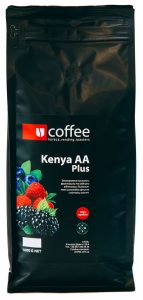 Coffee Kenya AА Plus / Arabica 100%
Aftertaste - Light and long berry-fruity aftertaste.
Coffee Kenya AА Plus / Arabica 100%
Aftertaste - Light and long berry-fruity aftertaste.
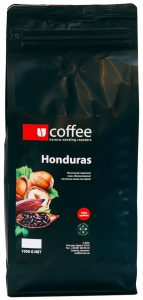 Coffee Honduras / Arabica 100%
Balanced taste of cocoa and nuts. Traditional sourness of Arabica is noticeable in the aroma and aftertaste.
Coffee Honduras / Arabica 100%
Balanced taste of cocoa and nuts. Traditional sourness of Arabica is noticeable in the aroma and aftertaste.
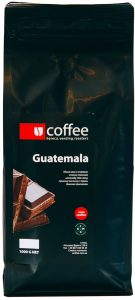 Coffee Guatemala / Arabica 100%
Strong coffee with a bright taste of dark chocolate. It has a light pleasant sourness with a pleasant aftertaste, inherent only noble drink.
Coffee Guatemala / Arabica 100%
Strong coffee with a bright taste of dark chocolate. It has a light pleasant sourness with a pleasant aftertaste, inherent only noble drink.
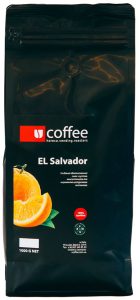 Coffee El Salvador / Arabica 100%
Strong coffee with a bright taste of dark chocolate. It has a light pleasant acidity with a bit smoky flavor.
Coffee El Salvador / Arabica 100%
Strong coffee with a bright taste of dark chocolate. It has a light pleasant acidity with a bit smoky flavor.
Whole Bean Coffee for Home and Office
Whole bean coffee is valued for its taste and freshness after grinding. You control the grind, temperature, extraction time, and get a flavor that can be repeated day after day. Coffee beans also retain aromatic compounds longer than ground coffee, because most volatile components are released only after grinding. That is why whole bean coffee usually provides a cleaner aroma and better drink structure when ground immediately before preparation.
Why the same coffee opens up differently in espresso and filter — the Ucoffee coffee and tea store will answer all these questions.
Why Whole Bean Coffee Gives More Aroma and Flavor
Coffee aroma consists of hundreds of compounds. After grinding, the contact area with air increases sharply, and oxidation accelerates. In the bean, the aromatic potential is preserved longer, especially if the packaging has a degassing valve and the coffee beans are stored away from overheating and sunlight.
When you plan to buy whole bean coffee, you are actually choosing a more aromatic and fresh format. The same blend can be adjusted for different methods: finer for espresso, coarser for a French press, medium for a moka pot. This is not about complicated rules, but about a simple cause-and-effect relationship: grind size determines extraction speed, and therefore the balance of acidity, sweetness, and bitterness.
Arabica and Robusta: What Is the Difference
Most often, buying whole bean coffee comes down to two types:
Arabica usually provides a broader aromatic profile: fruity, floral, caramel, and nutty notes. Its acidity can be light and wine-like or almost imperceptible, depending on origin and roast.
Robusta contains more caffeine and more often gives the drink a denser body, more pronounced bitterness, and crema in espresso. In coffee blends, robusta is used for strength, density, and flavor stability in milk-based drinks. For many household espresso machines, a blend of arabica and robusta is a practical option because it is easier to adjust and behaves more consistently under different humidity and temperature conditions.
Origin and Processing of Whole Bean Coffee: Why the Country Matters
Taste is formed not only by the variety, but also by growing conditions: altitude, climate, soils, and seasonality. Post-harvest processing of whole bean coffee is just as important.
Washed processing more often gives a clean taste and clear acidity. Natural processing can enhance fruitiness and sweetness, sometimes adding a more intense aroma. The honey process is often perceived as more sweetness without excessive sharpness. This is not a better-or-worse scale, but different styles that reveal themselves differently in the cup.
Roasting Whole Bean Coffee: How It Changes the Taste and What It Is For
The roast level affects the balance between the natural notes of the bean and caramelized tones.
Lighter roasting more often emphasizes acidity and the aroma of the coffee’s origin. It works well in filter methods, where clarity of taste is important.
Medium roast whole bean coffee usually gives a balanced cup and is suitable for most brewing methods. This is a universal option if you prepare both espresso and alternative coffee.
Darker roasting reduces acidity and enhances bitterness and notes of chocolate, caramel, and roasted nuts. This roast level of whole bean coffee is commonly used for classic espresso and milk-based drinks.
Grind Size and Brewing Method for Whole Bean Coffee
Grind size does not exist on its own; it works together with the recipe. A grind that is too fine in a French press will give bitterness and cloudiness, while a grind that is too coarse for espresso will result in a watery drink.
Espresso requires a fine grind and precision: dose weight, output in the cup, and flow time.
For V60, filter, or AeroPress, the grind is usually medium or medium-fine depending on the recipe.
For a moka pot, a medium grind is often suitable to avoid excessive bitterness.
For brewing in a cup and French press, a coarse grind is appropriate so that extraction is even.
It is at Ucoffee that whole bean coffee becomes most practical: you are not tied to one grind from the package, but adjust the drink to your equipment.
How to Assess Coffee Bean Quality Before Buying
There are several signs that help you make the right choice and buy whole bean coffee at Ucoffee.
First, the roast date and type of packaging. After roasting, beans release CO2 and gradually stabilize. Coffee that is too fresh can be more difficult in espresso due to active degassing, but in general, during the first weeks, the aromatic potential is usually the highest.
Second, bean uniformity. Even size and color often indicate better sorting and roasting. The presence of many fragments or differently colored coffee beans may signal an uneven batch.
Third, the match between taste and your habits. If you like milk-based drinks, you need a base with sufficient density. If you drink black coffee and value nuances, it is better to choose single origins with described notes and recommended brewing methods.
Price of Whole Bean Coffee: What the Cost Depends On
The cost of whole bean coffee is influenced by origin, yield, processing, logistics, defect percentage, and sorting standards. Single origins from high-altitude regions are often more expensive due to more difficult growing conditions and smaller production volumes. Rare processes or microlots also increase the cost of whole bean coffee.
At the same time, the price of whole bean coffee does not always directly equal your satisfaction. First, you need to determine the brewing method and desired taste, and only then compare options within your budget. If the goal is to buy whole bean coffee inexpensively, it makes sense to look at coffee blends.
What Amount of Whole Bean Coffee to Buy: 250 g, 500 g, or 1 kg
The amount should be tied to your consumption speed. If you drink coffee every day and prepare it for several people, buying 1 kg of whole bean coffee may be economically justified. For experimenting with different flavors and aromas, smaller packs are more convenient because you go through the tasting cycle faster and do not lose aroma during long storage.
It is also important how you store coffee beans after opening. If the package is large, it is better to transfer part of it into a separate container and open the main volume less often.
Storing Whole Bean Coffee at Home
The optimal conditions for storing whole bean coffee at home are simple: dry, cool, without direct light, and without strong odors nearby. An airtight container or a tightly closed package with a valve is usually enough. The refrigerator is not a universal solution because of moisture and odors, and frequent opening creates condensation. If you still freeze a supply, it only makes sense with airtight packaging and portioned thawing without repeated cycles.
How to Choose and Buy Whole Bean Coffee on Ucoffee
When the task is to order whole bean coffee for a specific coffee maker, it is best to start with two parameters: brewing method and taste expectations. Then you can narrow the choice by roast level and blend composition. Also, in the whole bean coffee catalog, it is worth paying attention to the description, brewing method recommendations, and packaging format.
If you are choosing coffee as a gift or for the office, you can order whole bean coffee with a neutral medium-roast taste: it is more universal. For those looking for pronounced fruitiness, it is better to choose arabica with a lighter roast for filter brewing.
Separately, regarding the intention to buy whole bean coffee without overpaying: compare not only the price tag, but also freshness, roast consistency, and suitability for the brewing method. In the end, you pay for the taste and aroma in the cup.
Questions and Answers About Ucoffee Whole Bean Coffee
Which whole bean coffee is better to buy for espresso at home: arabica or a blend?
For most home espresso machines, a blend of arabica with a small share of robusta is often easier to adjust and gives a denser drink. If you drink espresso without milk and want more nuances, you can start with 100% medium-roast arabica and adjust the recipe to your water and grinder.
How long does whole bean coffee keep after opening?
With proper storage, the aroma of coffee gradually weakens over the weeks. A practical guideline is to buy an amount you will use within 3–6 weeks after opening and keep the beans in an airtight container.
Why does the same whole bean coffee taste bitter in a cezve but normal in a filter?
The likely reason is grind size and extraction. A cezve requires a very fine grind and time control; otherwise, it is easy to get over-extraction. In a filter, the grind is coarser and extraction is more even, so bitterness may be less pronounced.
How can you tell if the grind size is suitable?
If the taste is watery and sour, you often need a finer grind or longer extraction. If the taste is sharply bitter and dry, a coarser grind or shorter contact with water is often needed. Make adjustments in small steps, changing one parameter at a time.
Is it cost-effective to buy whole bean coffee in large packaging?
Yes, if you consistently consume whole bean coffee and have proper storage conditions. That is why the format where you can buy 1 kg of whole bean coffee is often chosen for offices and families. If you like variety, smaller packages will give you more freedom.
How is the price of whole bean coffee formed and why does it differ even within one country of origin?
The price of whole bean coffee is influenced by growing altitude, variety, the harvest of a specific season, processing method, defect level, logistics, and batch size. Microlots and rare processes are usually more expensive, while blends may be more affordable at the same quality level.