



Herbal tea
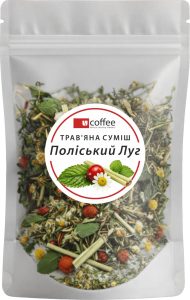 Herbal tea “Polisskyi Luh”
Senna, chamomile, Ivan tea, black and red currants, rose hips, orange peel, wildflower petals, strawberry slices, licorice root.
Herbal tea “Polisskyi Luh”
Senna, chamomile, Ivan tea, black and red currants, rose hips, orange peel, wildflower petals, strawberry slices, licorice root.
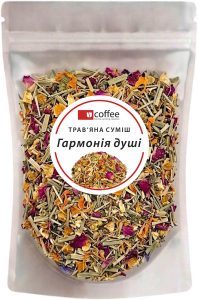 Herbal tea "Harmony of the Soul"
Honeybush, black lemon feather grass, crushed ginkgo biloba leaves, ginger, licorice, safflower, royal candle flowers, rose petals, natural vanilla flavor.
Herbal tea "Harmony of the Soul"
Honeybush, black lemon feather grass, crushed ginkgo biloba leaves, ginger, licorice, safflower, royal candle flowers, rose petals, natural vanilla flavor.
Herbal Tea at Ucoffee
Herbal tea is an infusion made from dried herbs, flowers, leaves, roots, and berries, which in its classic form does not contain leaves of the tea plant. Because of this, it usually contains no caffeine, while its taste and properties depend on the specific blend: mint, chamomile, thyme, lemon balm, linden, rosehip, or their combinations. This drink is consumed both for its taste and as a soothing or warming beverage. In the Ucoffee catalog, herbal tea is available in formats convenient for home use and establishments.
What Herbal Tea Is and How It Differs from Regular Tea
The fundamental difference is in the base: classic tea is made from camellia leaves, while herbal tea is composed of different parts of plants. More accurately, such a drink should be called a herbal infusion or tisane, since formally it is not tea. The most important consequence is the absence of caffeine, so the blend is suitable for the evening and for those for whom tonic drinks are contraindicated. At the same time, the taste varies greatly: from softly sweet (linden, chamomile) to fresh menthol-like (mint) or spicy (thyme, oregano).
Types and Composition of Herbal Tea
The composition directly determines the taste and purpose of the drink. Single-ingredient herbal tea consists of one plant — for example, pure chamomile, mint, or thyme. Multi-ingredient blends combine several herbs, berries, and flowers for a balanced taste or a specific effect: soothing blends with lemon balm and lavender, warming blends with ginger and rosehip, refreshing blends with mint. A quality product is recognized by whole, identifiable parts of plants, not by fine uniform dust.
Popular Herbal Teas and Their Effects
Each plant has its own characteristics, so the blend is chosen according to the situation. Mint and lemon balm help relax, chamomile is traditionally considered a mild soothing remedy, thyme and oregano provide a spicy taste, while rosehip is a source of vitamin C. Herbal tea with ginger warms in the cold season, and hibiscus-based karkade gives a sour taste and rich color. It is worth remembering that the effect of herbs is individual, and some of them have contraindications.
How to Choose Quality Herbal Tea
When choosing, focus on appearance, composition, and aroma. Quality herbal tea has a natural color, a pronounced herbal smell without mustiness, and visible whole parts of plants. Fine dust, a dull shade, or a weak aroma indicate stale or low-quality raw materials. It is also important to check the composition: some blends are suitable for daily use, while others are intended only for courses. Larger packaging is more convenient for establishments, while smaller packs are better for home use, as they can be used while still fresh.
How to Brew Herbal Tea
Most blends are brewed with hot water at 90–100°C, and the steeping time is longer than for loose-leaf tea — from 5 to 10 minutes. Delicate flowers and leaves (chamomile, mint) open up faster, while dense roots and berries require longer steeping or even brief boiling. To help herbal tea preserve its aroma and beneficial compounds, the vessel is covered with a lid during brewing. The exact proportions and time are indicated on the packaging of the specific blend.
Benefits and Absence of Caffeine
The main advantage of the drink is the absence of caffeine, so it can be consumed throughout the day, including in the evening. Depending on the composition, herbal tea may have a soothing, warming, or refreshing effect, while blends with rosehip and citrus additionally contain vitamin C. At the same time, herbs are not a neutral product: individual plants have contraindications, so during pregnancy, when taking medication, or with chronic conditions, it is worth consulting a doctor. Herbal infusions do not replace self-treatment.
How to Store Herbal Tea
Proper storage preserves the aroma and prevents the loss of properties. Herbal tea should be kept in a tightly closed opaque container, away from moisture, light, and foreign odors, which dried herbs easily absorb. It should not be placed next to coffee or spices. Blends are sensitive to time: essential oils gradually evaporate, so the product is best used within a year after packaging.
How to Order Herbal Tea at Ucoffee
You can place an order online on the Ucoffee website or by phone at +38 (067) 341 55 33. Delivery is carried out by “Nova Poshta” and by courier, with prepayment and cash on delivery available. Before buying, it is worth checking the composition and packaging in the description so that the selected herbal tea matches your needs — for daily use, an evening drink, or an establishment. For offices and HoReCa, it is more convenient to place wholesale orders.
Frequently Asked Questions About Herbal Tea
Does herbal tea contain caffeine?
In its classic form, no, because it consists of herbs, flowers, and roots without leaves of the tea plant. Caffeine appears only when green or black tea is added to the blend.
At what temperature should it be brewed?
Usually at 90–100°C with 5–10 minutes of steeping. Delicate flowers open up faster, while roots and berries require more time or brief boiling.
Can this drink be consumed daily?
It depends on the composition. Mild blends (chamomile, mint) are suitable for regular use, while some active herbs are better taken in courses and with consideration of contraindications.
What are the benefits of herbal tea?
It contains no caffeine, and depending on the composition, it may have a soothing, warming, or refreshing effect. Blends with rosehip and citrus add vitamin C.
How can you tell if the blend is high quality?
Look for a natural color, a pronounced aroma, and whole identifiable parts of plants. A musty smell, dull appearance, and fine dust indicate stale raw materials.