



100% Arabica coffee beans
 Coffee Cuba / Arabica 100%
Low acidity. Aftertaste: chocolate, tobacco, red apple, spices.
Coffee Cuba / Arabica 100%
Low acidity. Aftertaste: chocolate, tobacco, red apple, spices.
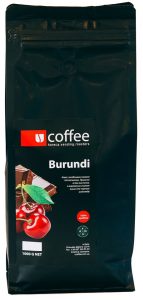 Coffee Burundi / Arabica 100%
In the fragrance there are floral shades, in the flavor cherry and plum notes with a chocolate notes.
Coffee Burundi / Arabica 100%
In the fragrance there are floral shades, in the flavor cherry and plum notes with a chocolate notes.
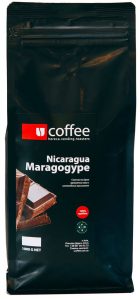 Coffee Nicaragua Maragogype / Arabica 100%
King beans!
Delicious, very aromatic coffee with chocolate flavor.
Coffee Nicaragua Maragogype / Arabica 100%
King beans!
Delicious, very aromatic coffee with chocolate flavor.
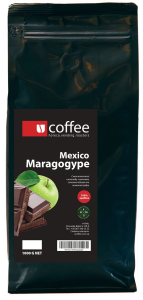 Coffee Mexico Maragogype / Arabica 100%
King beans!
Taste of milk chocolate with hints and lemon zest.
Coffee Mexico Maragogype / Arabica 100%
King beans!
Taste of milk chocolate with hints and lemon zest.
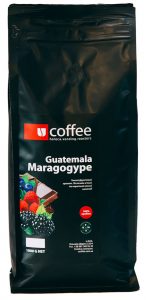 Coffee Guatemala Maragogype / Arabica 100%
King beans!
Long and persistent aftertaste of dark chocolate with berry notes.
Coffee Guatemala Maragogype / Arabica 100%
King beans!
Long and persistent aftertaste of dark chocolate with berry notes.
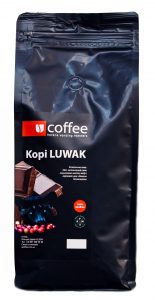 Coffee Kopi Luwak / Arabica 100%
Elite exclusive coffee.
Coffee Kopi Luwak / Arabica 100%
Elite exclusive coffee.
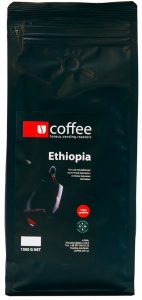 Coffee Ethiopia Yirgacheffe / Arabica 100%
Gentle and at the same time a savory flavor with a slight wine taste.
Coffee Ethiopia Yirgacheffe / Arabica 100%
Gentle and at the same time a savory flavor with a slight wine taste.
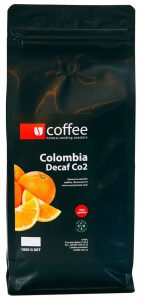 Coffee Colombia Decaf CO2 / Arabica 100%
Organic coffee without caffeine. Pleasant and soft citrus taste.
Coffee Colombia Decaf CO2 / Arabica 100%
Organic coffee without caffeine. Pleasant and soft citrus taste.
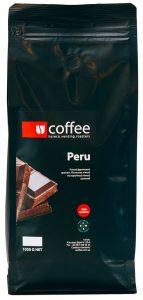
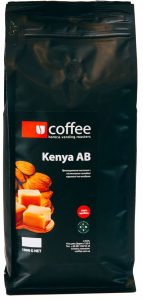 Coffee Kenya AB / Arabica 100%
Aftertaste - sweet caramel and almonds.
Coffee Kenya AB / Arabica 100%
Aftertaste - sweet caramel and almonds.
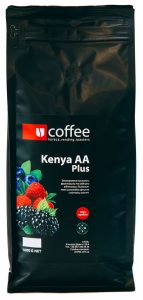 Coffee Kenya AА Plus / Arabica 100%
Aftertaste - Light and long berry-fruity aftertaste.
Coffee Kenya AА Plus / Arabica 100%
Aftertaste - Light and long berry-fruity aftertaste.
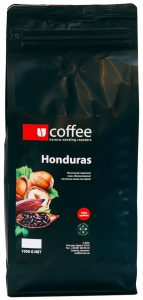 Coffee Honduras / Arabica 100%
Balanced taste of cocoa and nuts. Traditional sourness of Arabica is noticeable in the aroma and aftertaste.
Coffee Honduras / Arabica 100%
Balanced taste of cocoa and nuts. Traditional sourness of Arabica is noticeable in the aroma and aftertaste.
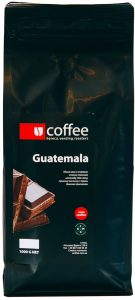 Coffee Guatemala / Arabica 100%
Strong coffee with a bright taste of dark chocolate. It has a light pleasant sourness with a pleasant aftertaste, inherent only noble drink.
Coffee Guatemala / Arabica 100%
Strong coffee with a bright taste of dark chocolate. It has a light pleasant sourness with a pleasant aftertaste, inherent only noble drink.
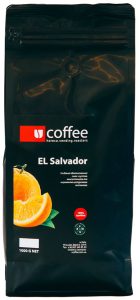 Coffee El Salvador / Arabica 100%
Strong coffee with a bright taste of dark chocolate. It has a light pleasant acidity with a bit smoky flavor.
Coffee El Salvador / Arabica 100%
Strong coffee with a bright taste of dark chocolate. It has a light pleasant acidity with a bit smoky flavor.
Arabica Whole Bean Coffee: How to Choose
100% Arabica whole bean coffee is valued for its richer aromatic spectrum and soft aroma. The whole bean format of Arabica preserves volatile compounds longer than ground coffee, so you get the most expressive aroma exactly at the moment of grinding before preparation. For the Ucoffee category, it is important to understand not only the country of origin, but also the processing, roasting, intended brewing method, and expected flavor profile.
What Arabica Is and How It Differs as a Species
Arabica whole bean coffee (Coffea arabica) is the most common species in the specialty and commercial segments because it has the potential for complex flavor nuances. Arabica beans usually contain more lipids and natural sugars than robusta, and on average less caffeine. This affects the perception of taste: sweetness, fruity or floral notes, and a cleaner aftertaste appear more often, while robusta more often gives rougher bitterness and a sharper tonic effect.
When the description says 100% Arabica coffee, it means there are no robusta admixtures in the composition. However, the inscription itself does not guarantee the same taste: terroir, processing, and roasting have a stronger influence on the result.
Arabica Origin and Growing Conditions: Why Arabica Is More Demanding
Ethiopia is usually considered the birthplace of Arabica coffee beans. Stories about the discovery of coffee exist in different versions, but the practical conclusion is one: Arabica whole bean coffee opens up best in a suitable growing environment. It often requires a more stable climate, sufficient rainfall, shade, and altitude, which for many regions starts at approximately 900 m above sea level and higher. At high altitudes, the berry ripens more slowly, forming a denser bean and a more complex aromatic profile.
The harvesting method of Arabica whole bean coffee is also important. For quality varieties, hand-picking of ripe berries is practiced because ripening on the branch is uneven. This increases the cost, but gives a better taste in the cup.
100% Arabica Whole Bean Coffee: How to Choose Beans for Your Taste and Brewing Method
When people buy 100% Arabica whole bean coffee, they usually look for a clean flavor profile without robusta admixtures. This format gives more variability: you can adjust the grind for espresso, filter, cezve, or moka pot and get aromatic coffee in the cup. In the Arabica whole bean coffee category, it is important to look not only at the name of the country, but at several parameters that really affect taste: growing altitude, processing method, roast freshness, and how the bean behaves in your equipment.
Whole Arabica beans preserve aroma longer than ground coffee because volatile compounds are released more actively after grinding. Therefore, at home, Arabica whole bean coffee almost always wins if you grind before preparation or use an automatic coffee machine where grinding takes place before extraction.
What 100% Arabica Means
The label 100% Arabica whole bean coffee only indicates the composition, but does not guarantee the same taste in different packs and brands. Within the Coffea arabica species, there are dozens of varieties and lines, and the final taste strongly depends on terroir and processing. The general tendency is this: Arabica more often has higher aromatic intensity and a wider range of flavor nuances, and also usually contains less caffeine than robusta. But the intensity of the drink is still determined by dosage, grind, and recipe.
If you are looking for a cleaner taste without harsh bitterness, Arabica whole bean coffee often suits better. If you need maximum strength or very dense crema, then people more often look at coffee blends.
Growing: Why Arabica Is Demanding and How It Affects the Price of Whole Bean Coffee
Arabica is more sensitive to climate, temperature fluctuations, and pests. Many quality lots are grown at altitude, where the berry ripens more slowly and the bean becomes denser. Hand-picking ripe berries also matters because ripening on the branch is uneven. As a result, this affects the cost and explains why different items within one species can differ noticeably in price and taste.
For the buyer, the conclusion is simple: when you plan to buy Arabica whole bean coffee, it is better to evaluate not marketing promises, but the specifics in the description: region, altitude, processing, roast profile, and recommended methods.
Arabica Bean Processing: Why One Country Can Produce Different Profiles
After harvesting, the Arabica berry must be processed: the bean must be separated and dried. It is at this stage that a significant part of the flavor character is formed.
Washed processing more often gives a clean, transparent cup with neat acidity. Natural processing often enhances sweetness and fruitiness, sometimes making the aroma more intense. The honey process is often perceived as a compromise: more sweet tones, but without excessive sharpness.
Whole Bean Coffee Roasting: How to Choose Arabica for Espresso, Filter, and Milk-Based Drinks
Lighter roasting of Arabica more often reveals the natural notes of origin: fruits, flowers, berries, and citrus. It is better suited for filter, V60, Chemex, and AeroPress, where clarity of taste is important.
Medium roast Arabica coffee is the most universal. It preserves the character of the bean but adds more pronounced sweetness and roundness. For many home scenarios, this is a safe choice.
Darker roasting reduces acidity and enhances caramel, chocolate, and nutty tones. For espresso and milk-based drinks, such a base often seems more stable because the taste does not get lost in milk.
Grind and Recipe for 100% Arabica Whole Bean Coffee
The same Arabica can seem sour, bitter, or watery not because of the bean, but because of the settings. Grind size and contact time with water determine the extraction level.
Espresso requires a fine grind and control of parameters: amount, yield, and time. For a moka pot, a medium grind is more often suitable so as not to move into excessive bitterness. For French press and brewing in a cup, a coarser grind is better, then the taste will be more even.
That is why whole 100% Arabica beans are convenient: you adjust the drink to yourself rather than adapting to one grind from the pack.
How to Narrow the Choice and Quickly Buy 100% Arabica Whole Bean Coffee on Ucoffee
To buy Arabica whole bean coffee without long experiments, first determine two points: how you prepare coffee and what flavor profile you want.
If you like black coffee and want nuances, look for lighter or medium roast Arabica, as well as descriptions with fruitiness or floral notes. If the main focus is cappuccino or latte, it is logical to choose a calmer flavor profile with chocolate and nuts and lower acidity.
Next, choose the packaging of Arabica whole bean coffee. Smaller packs are convenient for testing flavors. If you know for sure that the profile suits you, then it already makes sense to take a larger volume.
A separate practical request that often appears: buy 100% Arabica whole bean coffee for an automatic coffee machine. Here, medium roast and balanced varieties usually suit better because they extract more consistently in automatic machines.
Storing Arabica Whole Bean Coffee at Home: How Not to Lose the Aroma
Keep Arabica beans in a dark place, away from heat, in an airtight container or in a tightly closed pack. Frequent opening of the package accelerates aroma loss. The refrigerator is not a universal solution because of moisture and foreign odors. If you need a longer-term supply, it is better to freeze portions airtight, without repeated cycles.
How to Choose and Buy Quality Arabica Coffee on Ucoffee
In practice, people come with different goals: someone wants a stable taste for every day, someone is looking for bright varieties for filter. In both cases, it is convenient to choose Arabica whole bean coffee by brewing method and roast, and then by country of origin and processing.
In the Ucoffee catalog, you can comfortably buy Arabica whole bean coffee selected for your equipment. When you need to quickly order 1 kg of Arabica, the universal approach is this: medium roast, clear description, packaging that matches your consumption pace. And if you want experiments, it is better to take smaller packs and compare by one variable: either country, processing, or roast.
If your goal is specifically to buy 100% Arabica whole bean coffee to reveal notes and differences between regions, choose coffee with a clear description and recommendations for the brewing method.
As a result, the decision looks simple: you choose the flavor profile, add the required amount of Arabica whole bean coffee to the cart, and can order delivery. If you want to solve the morning coffee question once and for a long time, sometimes it is enough to find your taste once and then simply buy Arabica regularly in the same aroma.
Questions and Answers About Arabica Whole Bean Coffee
Does Arabica always have acidity?
No. Acidity depends on origin, processing, and roasting. Brazilian Arabica varieties are often softer, while Ethiopian or Kenyan ones are more often brighter, especially in light roasting.
Which Arabica coffee is better for an automatic coffee machine?
A balanced medium roast usually suits best. Such roasting extracts more consistently and gives an even taste without complex settings.
Why does coffee taste bitter even though it is 100% Arabica?
The most common reasons are a grind that is too fine, water that is too hot, or long extraction. Try a slightly coarser grind or shorten the preparation time.
Can one 1 kg pack of Arabica cover both espresso and filter?
Yes, if you choose a medium roast. It gives enough richness for espresso and preserves readable notes in filter coffee.
How can you understand whether a variety of Arabica whole bean coffee will suit you without tasting it?
Focus on three things: brewing method, note description, and roast level. If you like a calm profile, choose a nutty-chocolate taste and lower acidity.
How does 100% Arabica coffee differ from a blend?
In pure Arabica, you get the taste of origin without the influence of robusta. Blends are more often chosen for maximally dense espresso and stronger intensity.