



Arabica/Robusta coffee blends
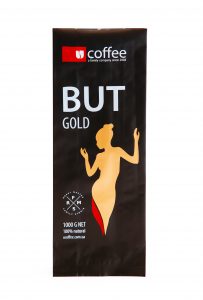 Coffee blend But Gold Family Studio / 70% of Arabica and 30% of Robusta
Pleasant sourness of the fragrant Arabica and the light fortress of the robusta. Aftertaste is a soft taste of cocoa and spices.
Coffee blend But Gold Family Studio / 70% of Arabica and 30% of Robusta
Pleasant sourness of the fragrant Arabica and the light fortress of the robusta. Aftertaste is a soft taste of cocoa and spices.
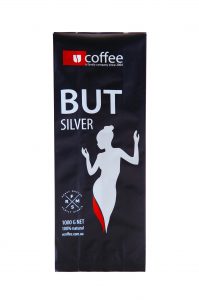 Coffee blend But Silver Family Studio / 50% of Arabica And 50% of Robusta
Ideally balanced taste. Pleasant durability and slightly source taste. Aftertaste - dark chocolate.
Coffee blend But Silver Family Studio / 50% of Arabica And 50% of Robusta
Ideally balanced taste. Pleasant durability and slightly source taste. Aftertaste - dark chocolate.
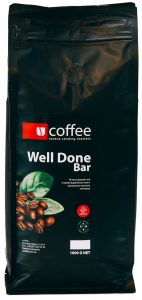 Coffee blend Well Done Bar / 70% of Arabica and 30% of Robusta
М’який аромат i яскраво виражений смак з приємними кислими нотками.
Coffee blend Well Done Bar / 70% of Arabica and 30% of Robusta
М’який аромат i яскраво виражений смак з приємними кислими нотками.
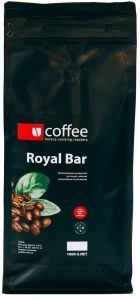 Coffee blend Royal Bar / 80% of Arabica and 20% of Robusta
Soft aroma and pronounced taste with pleasant sour notes.
Coffee blend Royal Bar / 80% of Arabica and 20% of Robusta
Soft aroma and pronounced taste with pleasant sour notes.
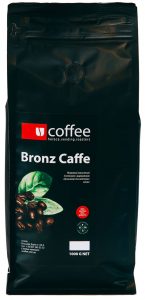 Coffee blend Bronz Caffe / 80% of Arabica and 20% of Robusta
For perfect espresso, double strength. Bright taste with pronounced sourness and strength. Aftertaste - saturated with bitter cocoa, long.
Coffee blend Bronz Caffe / 80% of Arabica and 20% of Robusta
For perfect espresso, double strength. Bright taste with pronounced sourness and strength. Aftertaste - saturated with bitter cocoa, long.
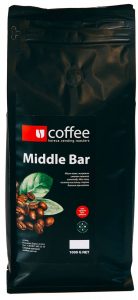 Coffee blend Middle Bar / 50% of Arabica And 50% of Robusta
Aromatic coffee in an ideal ratio. The aftertaste is chocolate, with moderate sourness.
Coffee blend Middle Bar / 50% of Arabica And 50% of Robusta
Aromatic coffee in an ideal ratio. The aftertaste is chocolate, with moderate sourness.
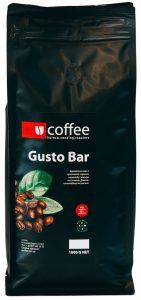 Coffee blend Gusto Bar / 60% of Arabica And 40% of Robusta
Aromatic coffee with a taste of black chocolate and delicate sourness. Aftertaste is chocolate, long.
Coffee blend Gusto Bar / 60% of Arabica And 40% of Robusta
Aromatic coffee with a taste of black chocolate and delicate sourness. Aftertaste is chocolate, long.
Arabica/Robusta Coffee Blend: Why Beans Are Mixed and How to Choose a Blend
A coffee blend is a mix of two or more coffees created to deliver richer taste, stable extraction, and the desired balance of strength. When Arabica and Robusta are combined, the goal is usually straightforward: keep Arabica’s aroma and sweetness while adding Robusta for a fuller body, a more pronounced bitterness, and higher caffeine intensity.
How a Whole-Bean Coffee Blend Differs from a Single-Origin Coffee
A single origin is coffee from one origin (country/region/farm or cooperative), where the focus is on terroir and processing character. A blend is about balance. It is designed so the flavor repeats from batch to batch and the drink stays stable across different equipment, from automatic machines to espresso setups and moka pots.
Blending also helps smooth out seasonal variation. Even with quality green coffee, different harvests can show different acidity or density. A blend makes it possible to offset these changes and keep a familiar cup style.
The Role of Arabica and Robusta in a Blend
Arabica more often delivers aroma, sweetness, and a broader range of flavor nuances. In the cup, this can show as nutty, caramel, or fruity notes depending on origin and roast.
Robusta usually adds:
- more caffeine and a stronger stimulating effect;
- a fuller body;
- more pronounced bitterness;
- more persistent crema in espresso.
That’s why an Arabica/Robusta whole-bean blend is often chosen for espresso and milk drinks: the blend holds its flavor better once milk is added and extracts more consistently even with small deviations in grind size or dose.
Ratios in Whole-Bean Coffee Blends: How They Change Taste and Perceived Strength
There is no universal formula, but coffee blends can be described like this:
90/10 or 80/20 Blend (Arabica/Robusta)
This is usually a compromise for those who want mostly Arabica character, but with more density and stability in espresso. In milk drinks, the flavor stays clear without becoming too harsh.
70/30 Blend (Arabica/Robusta)
One of the most popular blend formats for home espresso and automatic machines. It delivers a more noticeable strength, a fuller body, and often more pronounced crema, while Arabica still carries aroma and sweetness.
50/50 Blend (Arabica/Robusta)
This is a whole-bean blend with a stronger emphasis on intensity and bitterness. It is more often chosen by people who like a максимально насыщенный taste or prepare drinks where a strong base matters (for example, large milk portions).
The key point: the percentage of Robusta does not make a blend better or worse. It makes it different in purpose. Choose according to your habits and taste preferences.
Roasting for Coffee Blends
For Arabica/Robusta blends, medium or medium-dark roasts are used most often because they:
- reduce sharp acidity;
- enhance chocolate-caramel tones;
- deliver a more predictable espresso result.
Lighter roasting is less common in blends because it can highlight Arabica acidity and make the cup less classic for espresso. Darker roasting gives more bitterness and density, but it’s important not to cross the line where the roasty profile overwhelms the bean’s flavor.
Whole-Bean Coffee Blend: How to Match It to Your Brewing Method
Coffee Blend for an Automatic Coffee Machine
Balanced blends with a moderate share of Robusta often work best. They extract more consistently and are less demanding of fine-tuned settings.
Blend for a Manual Espresso Machine
A blend with Robusta helps achieve a denser texture and stable crema. This is convenient if you make espresso daily and want repeatable results.
Coffee Blend for a Moka Pot
A medium-roast whole-bean blend often produces a насыщенный drink without excessive acidity. Grind size is especially important here: too fine a grind can increase bitterness.
Blend for Turkish Coffee
Blends can be used if you like a dense, strong profile. However, Turkish coffee is very sensitive to grind size and temperature, so it’s better to start with softer ratios and adjust the recipe gradually.
Coffee Blend for Milk Drinks
A share of Robusta is often a plus because the taste does not disappear in milk. In such cases, a coffee blend often feels more pronounced than 100% Arabica with a light roast profile.
Freshness and Storage: What Matters for Blends
Whole-bean blends keep their aroma longer than ground coffee, but the same basics apply: airtight packaging, a dark place, no overheating, and minimal contact with air after opening. If you brew coffee often, it’s more practical to choose a bag size you will use within a few weeks so the taste stays consistent.
How to Choose and Buy a Whole-Bean Coffee Blend on Ucoffee
- Decide what matters more to you: aroma and мягкость, or strength and density.
- Choose your brewing method (automatic machine, espresso, moka pot, Turkish coffee).
- Pick an Arabica/Robusta ratio for your taste.
- Then look at the roast level and the blend description.
If you need a максимально versatile everyday coffee, balanced medium-roast blends are usually a good fit. If your main goal is strength and a pronounced bitterness, choose blends with a higher share of Robusta.
In the Ucoffee blend catalog, it’s logical to choose primarily by brewing method rather than by country of origin. Origin matters, but in blends it works as part of the overall profile.
If you plan to buy a coffee blend for home and want a good cup without long настройки, a blend is often a more practical choice than single origins.
Questions and Answers About Arabica/Robusta Coffee Blends
Why is robusta added to blends?
Most often, it is added to increase strength, add body, and make extraction more stable. For espresso, robusta can also provide a more stable crema.
Does robusta mean the coffee will be bitter?
Not necessarily. Bitterness depends on the roast and recipe. With the right balance and settings, robusta adds body and character, but should not overpower the taste of arabica.
Which coffee blend is better for cappuccino and latte?
It is often better to buy blends with a noticeable share of robusta because they retain expressiveness in milk. If there is too little robusta, the drink may be too mild.
Why are blends sometimes better than single origins?
Because they are created for a repeatable profile. Blending makes it possible to compensate for seasonal differences in harvests and maintain a similar taste across different batches.
Is a whole bean coffee blend suitable for an automatic coffee machine?
Yes, and it is often one of the most convenient formats. Automatic machines work better with stable profiles, where small deviations in settings do not cause a sharp drop in taste.
How can you tell that a coffee blend turns out watery?
Most often, this is a sign of under-extraction: the grind is too coarse, the dose is too small, or the preparation time is too short. Try a slightly finer grind or increase the dosage.
Can I order a whole bean coffee blend for the office?
Yes, blends usually work well for offices because they provide a stable taste for different people and different settings.
What is more important when choosing a whole bean coffee blend: the proportion or the roast?
For the overall style of the drink, both parameters are usually important. The proportion determines strength and body, while the roast determines the flavor direction — more chocolate/caramel or more acidity.
An Arabica/Robusta coffee blend is a practical format when stability, expressiveness, and control over strength are needed. A properly selected whole bean coffee blend for your brewing method gives a tasty drink without unnecessary experiments. If the goal is to quickly order everyday coffee for espresso, an automatic machine, or milk-based drinks, blends are one of the most convenient solutions in the Ucoffee catalog.