



Fruit Tea and Blends
Fruit tea is a drink based on dried fruits, berries, flower petals, and herbs, which in its classic form does not contain actual tea leaves. That is why, in most cases, it contains no caffeine, and its taste is formed by natural components: pieces of apple, rosehip, hibiscus, citrus fruits, and berries. Ready-made fruit tea blends are brewed in the same way as regular tea, producing a bright infusion with a pronounced aroma. In the Ucoffee catalog, this drink is available in formats convenient both for home use and for establishments.
What Fruit Tea Is and How It Differs from Regular Tea
The main difference lies in the base: classic tea is made from camellia leaves, while fruit tea consists of plant and berry components. Because of this, it usually contains no caffeine and is suitable for evening consumption and children’s menus. Hibiscus often gives a sour taste, dried apples and berries provide sweet notes, while citrus fruits and herbs add freshness. If tea leaves are added to the blend, the product is more accurately called flavored tea rather than purely fruit tea.
What Fruit Tea Blends Consist Of
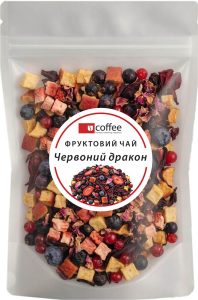
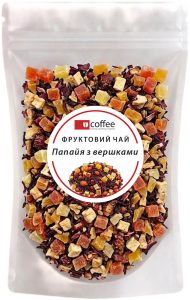
The composition determines both the taste and the benefits of the drink. Most often, fruit tea blends contain pieces of apple as a neutral sweet base, to which rosehip, hibiscus, orange zest, berries (blueberry, raspberry, strawberry), as well as flower petals and herbs are added. Natural components may be supplemented with flavorings for stable taste. A quality product is recognized by noticeable whole pieces of raw ingredients, not by fine uniform dust.
Popular Flavors of Fruit Tea
The assortment allows you to choose an option for any preference. Classics include hibiscus-based karkade with a sour profile, apple-cinnamon winter blends, citrus combinations, and berry compositions with forest berries. Refreshing options are complemented with mint or lemon balm. Any such fruit tea opens up equally well both hot and chilled, which is why it is often prepared as a cold drink in summer.
How to Choose Quality Fruit Tea Blends
When choosing, focus on appearance and composition. Quality fruit tea blends have large, noticeable pieces of fruits, berries, and flowers, and their dry aroma is natural, without a sharp synthetic note. It is worth paying attention to the share of hibiscus: the more of it there is, the more sour and darker the infusion aroma in them is natural, without a sharp synthetic note. It is worth paying attentiy. Larger packaging is more convenient for establishments, while smaller packs are better for home use, as they can be used up while the blend is still fresh.
How to Brew Fruit Tea
Since the base mainly consists of dense dried components, fruit tea is brewed with boiling water — 95–100°C. The steeping time is longer than for loose-leaf tea: 5–7 minutes, so that the fruits and berries have time to release their taste and color. One portion is usually brewed one or two times. For a cold drink, the blend is brewed stronger, then cooled and served with ice, citrus, or honey to taste.
Benefits and Absence of Caffeine
Fruit tea blends are valued primarily because they do not contain caffeine, so they are suitable for consumption throughout the day. Depending on the composition, the drink may be a source of vitamin C (rosehip, citrus fruits) and antioxidants (berries, hibiscus). Hibiscus also gives the infusion a sour taste and rich color. At the same time, it is worth considering that ready-made blends sometimes contain added sugar or flavorings, so it is better to check the composition on the packaging.
How to Store Fruit Tea
Proper storage preserves the aroma and prevents caking. Fruit tea should be kept in a tightly closed opaque container, away from moisture, light, and foreign odors. Dried fruits and berries are sensitive to humidity, so if there is too much moisture, the blend may lose its loose texture. It should not be stored next to coffee or spices, and it is better to use the product within a year after packaging.
How to Order Fruit Tea at Ucoffee
You can place an order online on the Ucoffee website or by phone at +38 (067) 341 55 33. Delivery is carried out by “Nova Poshta” and by courier, with prepayment and cash on delivery available. Before buying, it is worth checking the composition and packaging in the description so that the selected fruit tea matches your needs — for daily use, a cold drink, or an establishment. For offices and HoReCa, it is more convenient to place wholesale orders.
Frequently Asked Questions About Fruit Tea and Blends
Does fruit tea contain caffeine?
In its classic form, no, because it consists of fruits, berries, and herbs without tea leaves. If the composition includes green or black tea, caffeine will be present.
At what temperature should it be brewed?
With boiling water, 95–100°C, for 5–7 minutes. Dense dried components require a higher temperature and longer steeping than loose-leaf tea.
Why are some blends sour?
The sour taste and dark red color come from hibiscus (karkade). The higher its share in the composition, the more pronounced the sourness of the infusion.
Can fruit tea be drunk cold?
Yes, for this, the blend is brewed stronger, cooled, and served with ice. Thanks to the absence of caffeine, this drink is also suitable for the evening.
How can you tell if the blend is high quality?
Look for large visible pieces of fruits, berries, and flowers and a natural aroma. Fine dust and an overly sharp smell usually indicate cheap raw materials.